.jpeg/:/cr=t:0%25,l:0%25,w:100%25,h:100%25/rs=w:806,h:1075)
RAREST SHIRTS
Some shirts are iconic.
Others are incredibly difficult to find.
From rare goalkeeper shirts and limited-edition releases to match-worn pieces and collector's grails, these are some of the hardest City shirts to acquire. Explore the rarest shirts in the collection.
The rarest shirts. The ultimate collector's pieces.
93:20
.jpeg/:/cr=t:15.64%25,l:7.44%25,w:76.92%25,h:76.92%25/rs=w:400,cg:true,m)
The Story of the 2011 - 12 Manchester City Home Shirt
If one shirt captures the moment Manchester City changed forever, it is the 2011–12 Umbro home shirt.
For generations of City supporters, success had often felt just out of reach. There had been glorious moments, memorable players and famous victories, but league titles were something older fans spoke about from another era. Forty-four years had passed since Manchester City last lifted the league championship in 1968. Entire generations of supporters had grown up without seeing their club crowned champions of England.
That all changed on 13 May 2012.
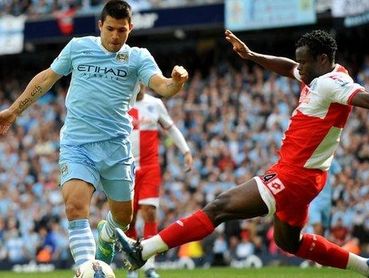
Today, the shirt is instantly recognisable. Manufactured by Umbro, it featured a clean and traditional sky-blue design that paid tribute to the club's history while subtly celebrating its future. Hidden within the fabric was a unique soundwave graphic inspired by the famous "Blue Moon" anthem, creating one of the most distinctive and meaningful Manchester City shirts ever produced.
At the start of the season, few supporters could have imagined the drama that lay ahead. Roberto Mancini's side contained stars such as Vincent Kompany, David Silva, Yaya Touré, Joe Hart, Carlos Tevez and a young Argentine striker named Sergio Agüero. Expectations were high, but so was the pressure. Manchester United remained the dominant force in English football, and many doubted whether City could maintain a title challenge over an entire season.
As the months passed, belief began to grow.
There were unforgettable performances throughout the campaign, none more significant than the 6-1 victory at Old Trafford in October 2011. Mario Balotelli's famous "Why Always Me?" celebration became one of the defining images of the Premier League era, and City supporters began to dream that something special might finally be happening.
Yet football rarely follows a simple script.
Heading into the final day of the season, Manchester City needed to beat Queens Park Rangers at the Etihad Stadium to guarantee the title. What followed remains one of the most dramatic afternoons in football history.
With just moments remaining, City were trailing 2-1.
The title was slipping away.
Supporters inside the stadium stood frozen between hope and disbelief. Some could barely watch. Others stared at the pitch, convinced the opportunity had been lost.
Then, in the 92nd minute, Edin Džeko scored to make it 2-2.
The Etihad erupted.
But City still needed one more goal.
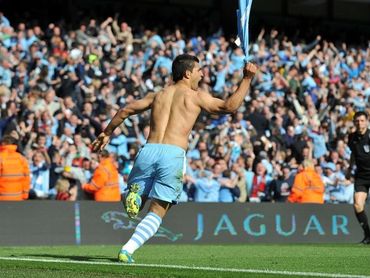
Seconds later, as the clock ticked beyond ninety-three minutes, Mario Balotelli slipped a pass to Sergio Agüero inside the penalty area. Agüero took a touch, drove forward and fired the ball into the net.
The stadium exploded.
Commentator Martin Tyler's unforgettable cry of "Agüerooooo!" echoed around the world as Manchester City secured the Premier League title in the most extraordinary fashion imaginable.
The scoreboard showed 93:20.
For City supporters, those four numbers would become immortal.
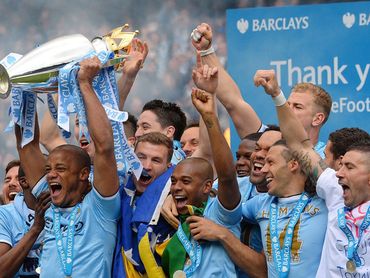
The goal ended forty-four years of waiting and began a new era in the club's history. It transformed Manchester City from ambitious challengers into champions and laid the foundations for one of the most successful periods English football has ever seen.
Because of that moment, the 2011–12 home shirt has become far more than a football shirt.
It represents belief.
It represents hope.
It represents the moment millions of City supporters around the world experienced pure footballing joy.
For collectors, it remains one of the most sought-after modern Manchester City shirts ever produced. Original examples in excellent condition continue to be highly desirable, particularly shirts featuring Premier League patches, player namesets or details linking them directly to the title-winning campaign.
Many shirts tell the story of a season.
This shirt tells the story of a moment.
One pass.
One shot.
One goal.
93 minutes and 20 seconds.
And Manchester City would never be the same again.
The Shirt That Saved Manchester City
.jpeg/:/rs=w:400,cg:true,m)
The Story of the 1998 - 99 Manchester City Away Shirt
There are shirts that celebrate success.
There are shirts that commemorate trophies.
And then there are shirts that represent survival.
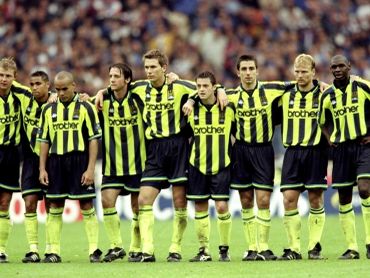
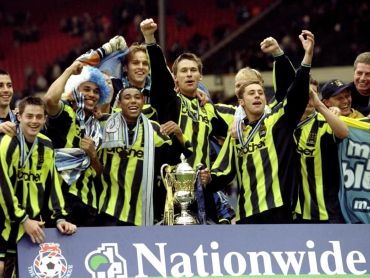
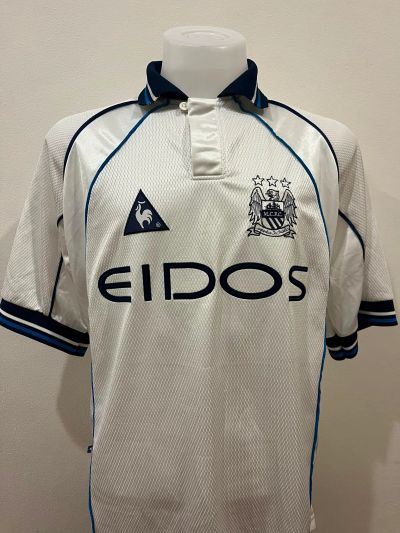
For many Manchester City supporters, no shirt captures the spirit of the club quite like the yellow and navy away shirt worn during the 1998–99 season. It was not worn while lifting the Premier League trophy. It was not worn in a European final. Instead, it became the symbol of one of the most dramatic and important moments in Manchester City's entire history.
Without what happened during that season, the modern Manchester City story may never have existed.
The late 1990s were a difficult time for the club. Years of instability, poor decisions and disappointing performances had seen Manchester City fall further than many supporters ever thought possible. By the start of the 1998–99 campaign, the club found itself in Division Two, the third tier of English football. For a club with City's history, it was almost unthinkable.
Yet despite the disappointment, the supporters remained.
Thousands continued to travel across the country every week, following their team through grounds that few could have imagined visiting only a decade earlier. While rival fans mocked City's fall from grace, those supporters who stayed developed an even stronger connection with the club. The yellow and navy away shirt became a familiar sight during that journey.
Manufactured by Kappa and sponsored by Eidos, the shirt stood out immediately. The bold yellow body contrasted with dark navy sleeves and detailing, creating one of the most distinctive away kits in Manchester City's history. At the time, few people could have known how closely it would become linked to one extraordinary afternoon at Wembley.
The season itself was far from straightforward.
City finished third in Division Two, narrowly missing automatic promotion and forcing the club into the play-offs. The reward was a trip to Wembley Stadium to face Gillingham in the play-off final. Promotion was within reach, but so was another year in the third tier.
What followed remains one of the most dramatic matches ever played by Manchester City.
As the game entered injury time, City were losing 2-0.
With only minutes remaining, promotion seemed impossible.
Supporters who had travelled to Wembley stood in disbelief. Some had already begun accepting defeat. Others simply stared at the pitch, unable to believe another devastating chapter was about to be written into the club's history.
Then everything changed.
Kevin Horlock scored in the ninetieth minute to make it 2-1 and give City a faint glimmer of hope. Even then, promotion still appeared unlikely. There were only seconds remaining.
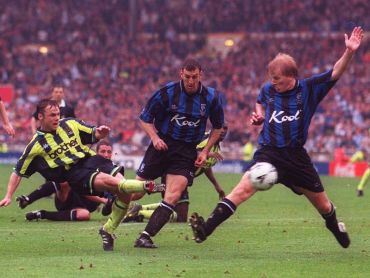
Deep into injury time, a long ball was launched into the Gillingham penalty area. The ball dropped. Players challenged. Chaos followed.
Then Paul Dickov reacted.
His finish found the corner of the net.
Wembley erupted.
Thousands of City supporters exploded with emotion as the scoreboard showed 2-2. What had seemed impossible only moments earlier had somehow become reality.
The image of Dickov racing away in celebration, arms outstretched and face filled with disbelief, remains one of the most iconic photographs in Manchester City's history. For many supporters, it is every bit as important as Agüero's goal in 2012.
The match eventually went to penalties.
City held their nerve.
Promotion was secured.
The club had escaped.
Looking back today, it is difficult to overstate the importance of that afternoon. Had City failed to win promotion, nobody knows what might have happened in the years that followed. The club's recovery could have been delayed for years. The journey back to the Premier League might have become even more difficult.
Instead, Wembley became the turning point.
The play-off final victory provided hope when hope had almost disappeared. It gave supporters a moment they would never forget and helped begin the long climb that would eventually lead Manchester City back to the top of English football.
That is why the 1998–99 away shirt occupies such a special place in the hearts of many City fans.
It represents resilience.
It represents belief in the face of failure.
It represents supporters who refused to abandon their club during its darkest years.
Most importantly, it represents the moment Manchester City's future changed direction.
For collectors, the shirt remains one of the most desirable pieces of modern Manchester City memorabilia. Original examples from the 1998–99 season continue to be highly sought after, particularly shirts featuring player namesets or details linked to the Wembley play-off campaign.
Many shirts tell the story of success.
This shirt tells the story of survival.
Without it, there may never have been a 93:20.
Without it, there may never have been Premier League titles, domestic trebles or Champions League glory.
Before Manchester City rose to the summit of world football, they first had to save themselves.
And for that reason, the yellow and navy away shirt of 1998–99 will always be remembered as the shirt that saved Manchester City.
The Treble Shirt
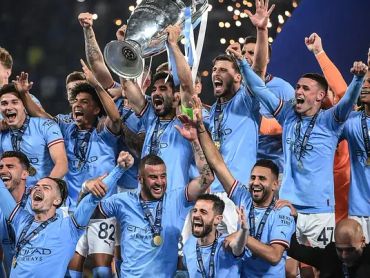
The Story of the 2022 - 23 Manchester City Home Shirt
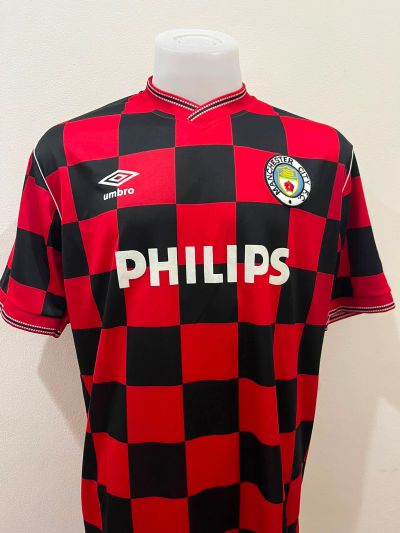
When Manchester City walked onto the pitch in Vienna on 13 May 1970, they weren't wearing sky blue.
For many younger supporters, that fact comes as a surprise.
The most important European match in Manchester City's history to that point was played not in the club's traditional colours, but in a striking red and black striped shirt inspired by one of the greatest teams in world football. More than fifty years later, it remains one of the most iconic shirts ever worn by Manchester City and one of the most important pieces in the club's history.
The decision was no accident.
Manchester City's charismatic assistant manager Malcolm Allison admired AC Milan, the dominant Italian side whose famous red and black stripes had become synonymous with success. Allison believed colours could influence confidence, mentality and even fear. If AC Milan could intimidate opponents in red and black, why couldn't Manchester City?
Whether it was psychology, superstition or simple belief hardly mattered. The shirt quickly became associated with success.
By the end of the 1960s, City had already lifted major trophies wearing red and black. Players embraced it. Supporters loved it. Opponents recognised it. What began as an experiment was becoming part of Manchester City's identity.
Then came Vienna.
The late 1960s and early 1970s represented one of the greatest periods in the club's history. Under the legendary management partnership of Joe Mercer and Malcolm Allison, Manchester City had assembled a side overflowing with talent, confidence and attacking flair. Colin Bell, Francis Lee, Mike Summerbee, Tony Book and Neil Young were not simply good players; they were the foundation of a team capable of competing with anyone in England and, increasingly, anyone in Europe.
Success had arrived quickly. The First Division title was secured in 1968, followed by the FA Cup in 1969. That FA Cup triumph earned City a place in the European Cup Winners' Cup, one of the continent's most prestigious competitions. Winning it would require City to travel across Europe and overcome some of the strongest cup-winning sides outside the European Cup itself.
The journey was anything but straightforward.
European football in 1970 was a very different challenge from the modern game. Long journeys, unfamiliar stadiums, difficult pitches and passionate home crowds created obstacles that many English clubs struggled to overcome. Yet City thrived. Round after round they demonstrated the same quality and resilience that had already made them champions in England. Confidence grew with every victory until only one match remained.
The final would be played in Vienna against Polish side Górnik Zabrze.
History was within touching distance.
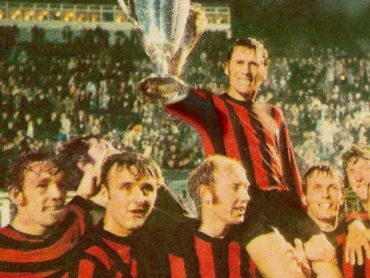
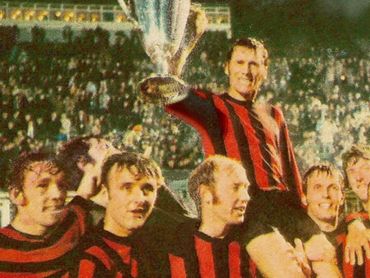
As the teams emerged onto the rain-soaked pitch, City's players wore the now-famous red and black stripes. The image has become one of the defining photographs in Manchester City's history. While supporters naturally associate the club with sky blue, it is those red and black stripes that accompanied City on one of the greatest nights the club had ever experienced.
Conditions were far from ideal.
Heavy rain had transformed parts of the pitch into a muddy battleground. Elegant football was difficult. Every challenge carried extra significance. The final would be won through determination as much as talent.
Manchester City adapted brilliantly.
After only twelve minutes, Francis Lee gave City the lead from the penalty spot. The goal settled nerves and reinforced the growing belief that European success was within reach. The match remained competitive, but City gradually imposed themselves on the occasion. Midway through the second half, Neil Young broke through and scored a second goal that moved City within touching distance of glory.
At 2-0, the dream suddenly felt real.
Górnik Zabrze fought back and eventually reduced the deficit through Włodzimierz Lubański, setting up a tense finish. The final minutes were filled with anxiety. Every clearance was cheered. Every tackle felt decisive. Thousands of travelling supporters watched as the clock edged closer to history.
Then came the final whistle.
Manchester City had won 2-1.
Players embraced on the soaked Vienna turf. Supporters celebrated in the stands. The European Cup Winners' Cup belonged to Manchester City.
For the first time in the club's history, a major European trophy was heading back to Manchester.
Looking back today, it is easy to underestimate the significance of that achievement. Modern football discussions are dominated by the Champions League, yet in 1970 winning a major European competition was an extraordinary accomplishment. Very few English clubs had managed it. Manchester City had earned their place among Europe's elite.
For more than fifty years, this remained the club's only major European trophy.
Generations of supporters grew up hearing stories about Vienna. The names Bell, Lee, Summerbee, Book and Young became woven into club folklore. The red and black shirt they wore that evening became inseparable from the achievement itself.
That is what makes this shirt so special.
It is not simply a beautiful football shirt.
It is not simply a rare collector's item.
It is the shirt that carried Manchester City to their first European triumph. It represents the confidence of Malcolm Allison, the brilliance of the Mercer-Allison era and a team that refused to believe success was limited to England alone.
For collectors, original examples from this period rank among the rarest and most desirable Manchester City shirts ever produced. Their scarcity alone makes them extraordinary, but their connection to one of the greatest nights in the club's history elevates them even further. Few shirts tell such an important story.
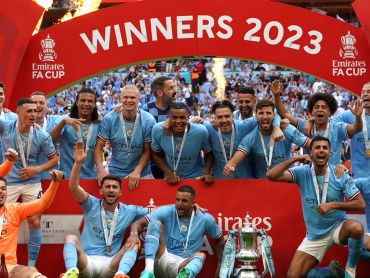
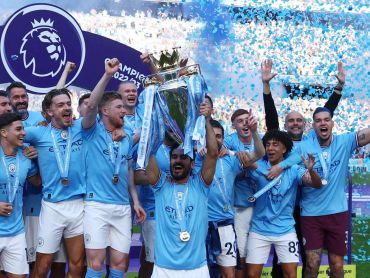
Many supporters celebrated when Manchester City finally lifted the Champions League trophy in Istanbul in 2023.
Yet that victory was not the beginning of City's European story.
More than five decades earlier, another Manchester City team had travelled across the continent wearing red and black stripes inspired by AC Milan and returned home with a European trophy.
Long before Istanbul, there was Vienna.
And this was the shirt that conquered Europe.
.jpeg/:/rs=w:370,h:278.1954887218045,cg:true,m/cr=w:370,h:278.1954887218045)
.jpeg/:/rs=w:370,h:278.1954887218045,cg:true,m/cr=w:370,h:278.1954887218045)
The Shirt That Announced City To The World
.jpeg/:/rs=w:400,cg:true,m)
The Story of the 1969 FA Cup Final Shirt
Every great football team has a moment when potential becomes reality.
A moment when promise becomes achievement.
A moment when everyone else finally notices what has been quietly building behind the scenes.
For Manchester City, that moment arrived at Wembley Stadium on 26 April 1969.
And this was the shirt they wore.
Today, the red-and-black striped shirt is one of the most iconic kits in Manchester City's history. It has become synonymous with the club's first modern golden era and remains one of the most recognisable shirts ever worn by City. Yet its significance extends far beyond its appearance.
This was the shirt worn by a team announcing itself to English football.
The late 1960s saw Manchester City transformed under the remarkable leadership of Joe Mercer and Malcolm Allison. Together they built a side that combined intelligence, flair, determination and attacking football in a way that captured the imagination of supporters throughout the country.
Mercer provided calm authority and leadership.
Allison brought confidence, innovation and ambition.
The combination proved extraordinary.
By 1968, Manchester City had already won the First Division title, finishing ahead of local rivals Manchester United in one of the closest championship races English football had ever witnessed. Yet despite becoming champions, there remained a sense that the wider football world had not fully appreciated just how good this Manchester City team could become.
The FA Cup offered the perfect opportunity to change that.
The squad itself was packed with talent.
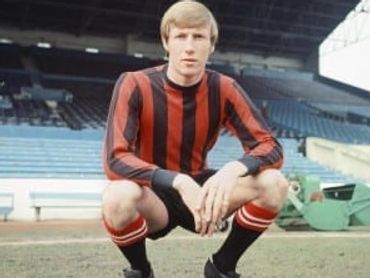
Colin Bell was emerging as one of Europe's finest midfielders, admired for his elegance, intelligence and remarkable athleticism. Francis Lee combined goals with fierce competitiveness and an unwavering desire to win. Mike Summerbee thrilled supporters with his creativity and flair. Tony Book captained the side with authority and composure. Around them stood a collection of players who would eventually become legends of the club.
Together, they were creating something special.
Reaching the 1969 FA Cup Final provided another opportunity to demonstrate their quality on the biggest domestic stage in English football.
Wembley was waiting.
More than 100,000 spectators filled the famous stadium beneath the Twin Towers. Millions more followed the match on television. For many football supporters around the country, this would be their first extended look at the exciting Manchester City side that had already claimed the league title.
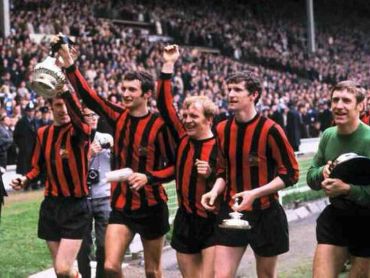
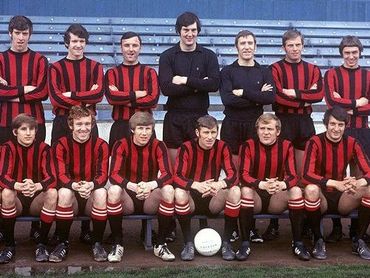
As the teams emerged from the tunnel, City's players wore the now-famous red-and-black stripes.
The image remains one of the defining photographs of the era.
Bell.
Lee.
Summerbee.
Book.
A team on the rise.
The match itself could hardly have started better.
After less than a minute, Neil Young scored what proved to be the decisive goal. The perfect start settled any nerves and immediately put Leicester City under pressure. Throughout the afternoon, Manchester City displayed the qualities that had already made them champions. They remained organised, disciplined and dangerous whenever opportunities appeared.
Leicester fought hard to find a way back into the match, but City's defence stood firm.
As the clock ticked down, belief grew among the thousands of City supporters packed into Wembley.
Another trophy was within reach.
When the final whistle finally arrived, Manchester City had secured a 1-0 victory and lifted the FA Cup.
Players celebrated beneath the famous towers.
Supporters sang long into the evening.
A second major trophy had been secured in little more than twelve months.
Looking back today, it is easy to see why the victory proved so significant.
The league title of 1968 had established Manchester City as champions.
The FA Cup triumph of 1969 established them as a great team.
The victory confirmed that their success was no accident. This was not a club enjoying a brief moment in the spotlight. This was a side capable of building a lasting legacy. Across England, football supporters began to recognise what Manchester City fans already knew.
The Mercer-Allison team was one of the best in the country.
More importantly, their story was only just beginning.
Within twelve months, many of the same players would travel to Vienna and win the European Cup Winners' Cup. The red-and-black shirt would once again become part of football history. Yet before Manchester City conquered Europe, they first captured the attention of the football world at Wembley.
That is why this shirt remains so important.
It represents more than a trophy.
It represents an arrival.
It represents the moment a talented group of players became one of the defining teams of their generation.
For collectors, original examples from the 1968–69 season rank among the most desirable Manchester City shirts ever produced. Their rarity makes them special, but their historical significance makes them priceless. They are a tangible reminder of the day Manchester City stepped onto the biggest stage in English football and announced that a new force had arrived.
Many shirts tell the story of a victory.
This shirt tells the story of a beginning.
The beginning of a golden era.
The beginning of a legendary team.
The beginning of a journey that would soon lead beyond England and into Europe.
For Manchester City, it all started here.
And this was the shirt that announced City to the world.
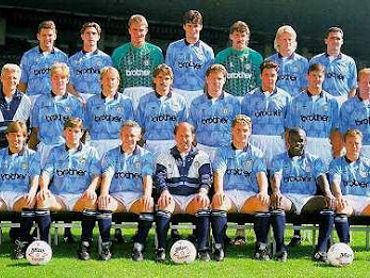
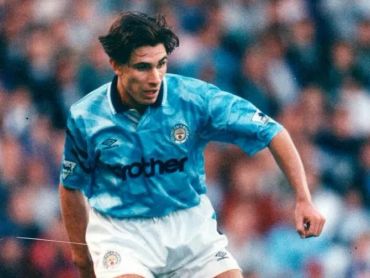
The Maine Road Classic
The Story of the 1989 - 91 Brother Home Shirt
Every football club has a shirt that instantly transports supporters back to a particular place and time.
A shirt that requires no explanation.
A shirt that evokes memories the moment it appears.
For Manchester City supporters of a certain generation, that shirt is the famous Brother home shirt.
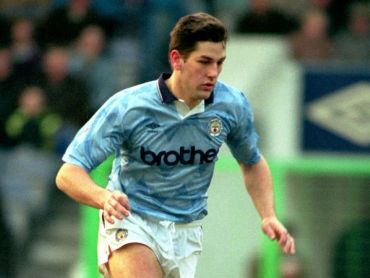
With its sky-blue design, distinctive white and navy detailing, Umbro diamond trim and iconic sponsor logo stretched proudly across the chest, it has become one of the most beloved shirts in the club's history. More than thirty years after it first appeared, it remains a firm favourite among supporters, collectors and football shirt enthusiasts alike.
This was the shirt of Maine Road.
The shirt of packed Kippax afternoons.
The shirt of a club rediscovering itself.
The shirt of a generation.
To understand why it remains so loved, it is important to remember where Manchester City stood at the end of the 1980s.
The previous decade had brought frustration and inconsistency. The glory years of Mercer, Allison, Bell, Lee and Summerbee had faded into history. Relegation and promotion battles had replaced trophy celebrations. Supporters remained fiercely loyal, but success often felt frustratingly distant.
Yet despite the challenges, something special still existed around Maine Road.
Manchester City remained one of the best-supported clubs in England. Crowds continued to fill the stadium. Away followings travelled in huge numbers. The bond between club and supporters grew even stronger during difficult periods.
In many ways, Manchester City supporters developed the resilience that would later define them.
The 1989–90 season arrived carrying fresh optimism.
Under manager Howard Kendall and later Peter Reid, City began to assemble a side capable of competing once again. The squad featured players who would become favourites among supporters, including Andy Hinchcliffe, Ian Brightwell, David White, Paul Lake and a young striker who would soon become one of the most important figures of the era.
Niall Quinn.
Tall, charismatic and immensely popular, Quinn quickly became a symbol of the team. Alongside him, City developed a style of football that was energetic, aggressive and perfectly suited to the atmosphere of Maine Road.
The shirt itself quickly became part of that identity.
Manufactured by Umbro, it perfectly captured football shirt design at the end of the 1980s. The famous Umbro diamond pattern running across the sleeves became one of the defining visual features of the era. The Brother sponsor sat proudly across the chest, creating a design that somehow felt both modern and timeless.
Many football shirts become dated.
This one never did.
Even today, it regularly appears on lists of the greatest Manchester City shirts ever produced. Supporters who never watched the team wear it still seek it out. Younger fans recognise it instantly. Collectors regard original examples as essential pieces of Manchester City history.
Part of that affection comes from what the shirt represents.
While it was not associated with league titles or major trophies, it became linked to something equally powerful: identity.
This was Manchester City before the modern era.
Before billionaire owners.
Before global success.
Before the Etihad Stadium.
Before Premier League titles and Champions League nights.
It represents a club that remained imperfect, unpredictable and occasionally frustrating, yet impossible not to love.
Maine Road itself played a huge part in that story.
One of English football's great stadiums, it possessed an atmosphere unlike anywhere else in the country. The Kippax Stand became legendary. Opposing teams knew they would face noise, passion and unwavering support. On its day, Maine Road could feel intimidating, electric and utterly unique.
The Brother shirt became inseparable from that environment.
Mention the shirt and supporters immediately think of packed terraces, winter afternoons under floodlights and the unmistakable sight of thousands of sky-blue scarves stretching across the Kippax.
They remember Quinn's goals.
David White's pace.
Paul Lake's immense talent.
Derby victories.
Cup runs.
The feeling that something exciting might happen at any moment.
Perhaps that is why the shirt continues to resonate so strongly.
It captures a version of Manchester City that modern success has not erased but has inevitably transformed. It reminds supporters of where the club came from and the generations who followed City long before trophies became expected.
For collectors, original examples of the Brother shirt remain among the most sought-after Manchester City shirts ever produced. Finding one in excellent condition has become increasingly difficult as the years have passed. The combination of nostalgia, design and historical significance ensures demand remains exceptionally strong.
Many shirts are remembered because they were worn during great triumphs.
Others because they were associated with legendary players.
This shirt is remembered because it represents an entire era.
An era of Maine Road.
An era of loyal supporters.
An era that shaped the identity of Manchester City long before the club conquered English and European football.
For thousands of supporters, no shirt captures the spirit of old Manchester City quite like this one.
It is not simply a football shirt.
It is a time machine.
And that is why the Brother shirt will always be remembered as the Maine Road Classic.
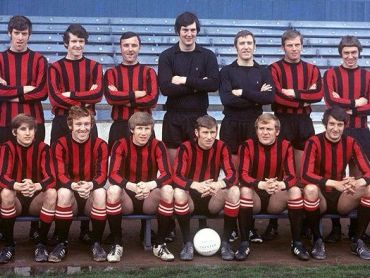
The Shirt That Conquered Europe
.jpeg/:/cr=t:7.63%25,l:7.63%25,w:84.75%25,h:84.75%25/rs=w:400,cg:true,m)
The Story of the 1970 European Cup Winners' Cup Final Shirt
A year earlier, Manchester City had announced themselves to English football.
Now they wanted to prove they belonged among Europe's elite.
When the final whistle blew at Wembley in April 1969, the Mercer-Allison team had already established itself as one of the finest sides in England. League champions in 1968 and FA Cup winners in 1969, Manchester City had become a club on the rise. Yet football's greatest challenges often exist beyond domestic competition.
Europe was waiting.
The reward for winning the FA Cup was qualification for the European Cup Winners' Cup, one of the continent's most prestigious tournaments. The competition brought together domestic cup winners from across Europe, creating a stage where clubs could measure themselves against unfamiliar opponents, different styles of football and hostile away atmospheres.
For Manchester City, it was an opportunity to discover just how good they really were.
The squad travelling into Europe was packed with talent. Colin Bell continued to establish himself as one of the finest midfielders on the continent. Francis Lee combined relentless energy with a goalscorer's instinct. Mike Summerbee brought creativity and unpredictability. Tony Book provided leadership and experience. Around them stood a team that had already achieved remarkable success but remained hungry for more.
The European campaign tested them immediately.
Away trips in 1970 bore little resemblance to modern European football. Long journeys, unfamiliar stadiums and passionate home support created challenges that many English clubs struggled to overcome. Every round brought a different opponent and a different style of football. Yet City adapted impressively.
With each victory, belief grew.
The possibility of European silverware no longer felt like a dream.
It felt achievable.
Round by round, Manchester City progressed through the competition until only one obstacle remained between them and history.
Górnik Zabrze.
The Polish side had reached the final through an impressive campaign of their own and arrived in Vienna determined to become European champions. Manchester City knew they faced a difficult challenge, but they also understood the opportunity before them.
No Manchester City team had ever won a major European trophy.
Victory would change that forever.
On 13 May 1970, the two sides met in Vienna.
As they had done on so many important occasions during this era, City wore the famous red-and-black stripes. By now the shirt had already become associated with success. Supporters recognised it immediately. Opponents respected it. The colours that had accompanied the FA Cup triumph twelve months earlier were now appearing on the biggest European stage the club had ever reached.
Conditions were far from ideal.
Heavy rain had drenched the pitch, transforming parts of the playing surface into a muddy battlefield. Elegant football became difficult. Every pass carried risk. Every challenge sent water spraying into the air. This would not be a final won through style alone.
It would require character.
Fortunately, this Manchester City side possessed plenty of it.
The breakthrough arrived after just twelve minutes.
Francis Lee stepped forward to take a penalty and calmly converted, giving City the perfect start. Thousands of travelling supporters celebrated wildly. For the first time, the possibility of European glory felt real.
The goal settled the team.
As the match progressed, City began imposing themselves on the occasion. They remained organised defensively while continuing to threaten going forward. Then, midway through the second half, came the moment that moved them within touching distance of history.
Neil Young scored City's second goal.
At 2-0, dreams suddenly felt tangible.
Górnik Zabrze refused to surrender and eventually reduced the deficit through Włodzimierz Lubański. The final minutes became increasingly tense. Every clearance was cheered. Every tackle felt vital. Every passing second carried Manchester City closer to a place in history.
Then came the final whistle.
Manchester City had won.
Players embraced one another on the rain-soaked pitch. Supporters celebrated in the stands. Across Manchester, thousands followed the news that their club had achieved something no previous City side had ever accomplished.
Manchester City were European champions.
The significance of that victory is sometimes overlooked in the modern era. Today, conversations about European football naturally focus on the Champions League. Yet in 1970, winning the European Cup Winners' Cup represented one of the greatest achievements available to any club on the continent.
For Manchester City supporters, it became a moment that would define an entire generation.
For more than fifty years, this remained the club's only major European trophy. Generations of fans grew up hearing stories about Vienna. The names Bell, Lee, Summerbee, Book and Young became woven into club folklore. The victory stood as proof that Manchester City had not simply conquered England.
They had conquered Europe too.
That is why this shirt remains so important.
It represents the completion of a journey that began with the league title in 1968 and accelerated at Wembley in 1969. It represents a team reaching the peak of its powers. Most importantly, it represents the first time Manchester City stood on top of European football.
For collectors, original examples of the 1970 European Cup Winners' Cup Final shirt rank among the most important Manchester City shirts ever produced. Their rarity alone makes them highly desirable, but their connection to the club's first European triumph elevates them to legendary status.
Many shirts celebrate great victories.
Few celebrate the first time a club conquered an entire continent.
The red-and-black stripes had already announced Manchester City to the football world.
In Vienna, they did something even greater.
They conquered Europe.
The Overhead Kick
.jpeg/:/rs=w:400,cg:true,m)
The Story of the 1976 League Cup Final Shirt
Some goals win matches.
Some goals win trophies.
A select few become part of football folklore.
For Manchester City supporters, Dennis Tueart's overhead kick at Wembley belongs firmly in that category. Nearly fifty years later, it remains one of the most celebrated goals in the club's history and one of the defining moments of the post-Mercer era.
The shirt worn that afternoon has become inseparable from the goal itself.
Whenever supporters see images of the famous strike, they see the sky-blue shirt, the Wembley pitch and Dennis Tueart suspended impossibly in the air as he connected with one of the most iconic goals ever scored in a major cup final.
The 1975–76 season arrived during a period of transition for Manchester City. The great Mercer-Allison era had delivered league titles, domestic cups and European success, but football moves quickly. New players were emerging, new challenges awaited and a new generation was beginning to write its own chapter in the club's history.
One of those players was Dennis Tueart.
Energetic, skilful and fearless, Tueart quickly became a favourite among supporters. He possessed a flair for the spectacular and a willingness to attempt things other players would never consider. It was a quality that would soon secure his place in Manchester City folklore.
The League Cup offered City an opportunity to add more silverware to the trophy cabinet, and after progressing through the competition they reached Wembley to face Newcastle United in the final.
More than 100,000 supporters packed into the famous stadium.
The occasion delivered exactly the drama expected of a major final.
Manchester City took the lead through Peter Barnes before Newcastle responded through Alan Gowling. At 1-1, the match hung delicately in the balance. One moment of quality would likely decide the destination of the trophy.
That moment arrived midway through the second half.
A cross was delivered into the penalty area.
The ball dropped behind Tueart.
Most players would have controlled it.
Others might have looked for a teammate.
Dennis Tueart chose something different.
Launching himself into the air, he connected perfectly with an overhead kick that flew past Newcastle goalkeeper Mike Mahoney and into the net.
For a split second, Wembley stood frozen.
Then came the explosion.
Supporters erupted in celebration as Tueart wheeled away. Teammates raced towards him. Commentators struggled to find the words. Everyone inside the stadium understood they had witnessed something extraordinary.
The goal proved decisive.
Manchester City held on to secure a 2-1 victory and lift the League Cup for the second time in the club's history.
Yet while trophies are often remembered, it is the goal that has endured.
Decades later, supporters still debate whether it remains the greatest goal ever scored by a Manchester City player. Generations who never saw the match live recognise the image instantly. The overhead kick has been replayed thousands of times, becoming one of the defining moments in Wembley history and one of the most famous goals ever scored in an English cup final.
For collectors, the shirt worn during the 1976 League Cup-winning season occupies a special place in Manchester City history. It represents a team carrying forward the winning mentality established during the previous decade while creating new memories of its own.
Most importantly, it represents a single moment.
One cross.
One leap.
One unforgettable strike.
Many shirts are remembered because of the trophies won in them.
This shirt is remembered because of a goal.
A goal so spectacular that nearly half a century later, Manchester City supporters still talk about it.
And that is why it will forever be known as the shirt of the overhead kick.
The Last Great Shirt Before The Fall
The Story of the 1993 - 95 Umbro Home Shirt
Some shirts are remembered because they were worn during a club's greatest triumphs.
Others are remembered because they represent a moment frozen in time.
For Manchester City supporters, the 1993–95 Umbro home shirt belongs firmly in the second category.
Beautifully designed and instantly recognisable, it remains one of the most admired shirts in the club's history. With its classic sky-blue colour, distinctive navy detailing and iconic Umbro sleeve pattern, it perfectly captured the look and feel of English football during the early Premier League era.
More than thirty years later, many supporters still regard it as one of the finest home shirts Manchester City have ever worn.
Yet what makes the shirt truly memorable is the contrast between its appearance and the period it represents.
At first glance, the future appeared bright.
The Premier League had recently been formed. Manchester City remained a major club playing in front of large crowds at Maine Road. Exciting young players were emerging, and there was a sense that the club should be competing near the top of English football.
The squad featured several fan favourites, including Niall Quinn, Uwe Rösler, Keith Curle and the immensely talented Paul Walsh. Maine Road continued to produce some of the best atmospheres in the country, and supporters travelled in huge numbers wherever City played.
On the surface, everything still felt familiar.
Yet beneath that optimism, problems were beginning to emerge.
The club struggled for consistency. Managers came and went. Promising performances were too often followed by disappointing results. While rivals adapted quickly to the new Premier League era, Manchester City increasingly found themselves drifting away from the top of the table.
Supporters could sense something wasn't quite right.
Not immediately.
Not dramatically.
But gradually.
The warning signs were there.
Looking back now, the shirt occupies a fascinating place in Manchester City's history because it sits on the dividing line between two eras. It was worn during the final years when many supporters still expected Manchester City to be competing among England's leading clubs. It represents the last period before a decline that would eventually lead to relegation, financial uncertainty and the dark days of the late 1990s.
At the time, nobody could have imagined how far the club would fall.
Nor could they have imagined how spectacularly it would eventually rise again.
That is what gives this shirt its unique place in the collection.
It represents a moment suspended between past and future.
The glory years of the Mercer-Allison era were long gone. The remarkable successes of the modern era remained decades away. Manchester City stood somewhere in between, still carrying the stature of a major club while unknowingly moving towards one of the most difficult periods in its history.
For collectors, the shirt has become increasingly desirable over time. Its design alone makes it one of the standout kits of the 1990s, while its connection to Maine Road and the early Premier League years gives it enormous nostalgic appeal.
Many supporters who grew up during the period remember it fondly.
Many younger fans discover it and immediately understand why.
It is elegant.
It is distinctive.
It is unmistakably Manchester City.
Most importantly, it tells an important story.
Not every iconic shirt celebrates a trophy.
Not every memorable shirt marks a victory.
Some become significant because they capture a club at a crossroads.
The 1993–95 Umbro home shirt represents the final chapter before Manchester City's long journey through adversity, recovery and eventual triumph.
A beautiful shirt.
A changing club.
And the last great shirt before the fall.
From The Brink
.jpeg/:/cr=t:9.82%25,l:5.36%25,w:89.29%25,h:89.29%25/rs=w:400,cg:true,m)
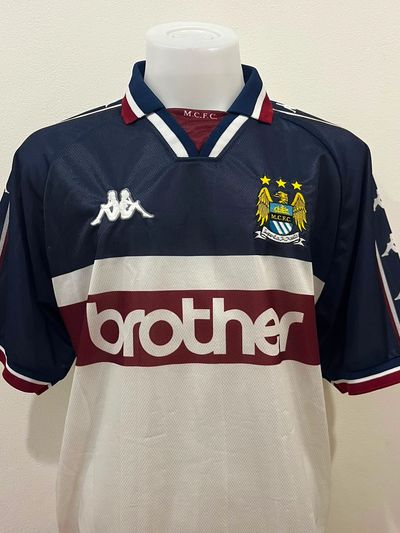
The Story of the 1997 - 99 Kappa Home Shirt
Not every iconic football shirt is associated with trophies.
Not every memorable shirt represents success.
Some become important because of what they helped a club survive.
For Manchester City supporters, few shirts tell a more important story than the 1997–99 Kappa home shirt.
It was not worn during title celebrations.
It was not worn in a cup final victory.
It was not worn on a famous European night.
Instead, it was worn during one of the most difficult periods in the club's entire history.
That is precisely why it matters.
Today, the shirt remains one of the most recognisable Manchester City kits ever produced. Manufactured by Kappa, its simple sky-blue design captured the look of late-1990s football perfectly. The fitted style, distinctive shoulder logos and clean appearance gave it a unique identity that still stands out decades later.
For many supporters, however, the shirt's significance has very little to do with its design.
It is about what it represents.
The late 1990s were turbulent years for Manchester City.
Only a generation earlier, the club had been winning league titles, FA Cups and European trophies. Maine Road had witnessed some of the greatest teams in the club's history. Yet football can change quickly. Years of instability, poor decisions and disappointing performances gradually dragged City away from the top of English football.
Each season seemed to bring fresh frustration.
Managers changed.
Players came and went.
Optimism repeatedly gave way to disappointment.
Supporters watched as the club drifted further from the standards it had once set for itself.
Then came the unthinkable.
In 1998, Manchester City were relegated to Division Two.
The third tier of English football.
For many supporters, it felt impossible to comprehend.
Manchester City were one of England's best-supported clubs. Maine Road regularly attracted crowds that many Premier League teams would have envied. The club possessed history, tradition and a passionate fanbase. Yet none of those things guaranteed success on the pitch.
Football offered no special treatment.
City had fallen.
The remarkable thing was what happened next.
The supporters stayed.
Week after week, thousands continued to fill Maine Road. Away followings remained enormous. The atmosphere inside the stadium often felt less like resignation and more like defiance. There was frustration, certainly. There was anger at times. Yet there was also an extraordinary loyalty that helped define the club during this period.
Many supporters who lived through those years still speak about them differently from any other era.
Not because the football was better.
Not because the results were better.
But because the connection between club and supporters became stronger than ever.
This shirt became the symbol of that relationship.
It was worn by players who carried the responsibility of rebuilding a fallen club. Andy Morrison arrived and quickly established himself as a leader. His determination and commitment reflected the mood of the supporters. Joe Royle's arrival as manager brought renewed belief. Gradually, the sense of hopelessness that had surrounded the club began to lift.
Not immediately.
Not dramatically.
But steadily.
For the first time in several years, supporters could see a direction emerging.
They could see people fighting for the club.
They could see reasons to believe again.
That is what makes this shirt so important in Manchester City's story.
It represents the period before the recovery became visible to the rest of the football world. It represents the difficult work that happened before the headlines. Before the celebrations. Before the famous moments.
The club was still hurting.
The future remained uncertain.
Yet beneath the surface, the foundations were being rebuilt.
Looking back now, it is impossible not to view those years differently.
Modern Manchester City supporters have witnessed Premier League titles, domestic trebles, record-breaking teams and Champions League glory. The club has become one of the most successful organisations in world football.
Yet none of that success would mean quite as much without understanding where the journey came from.
This shirt reminds supporters of that reality.
It reminds them that greatness is not inevitable.
It reminds them that football clubs are defined as much by how they respond to adversity as by how they celebrate success.
For collectors, the 1997–99 Kappa home shirt remains one of the most desirable shirts of the Maine Road era. Its popularity stems not from silverware or famous victories, but from its connection to one of the most emotionally significant periods in the club's history.
Many shirts tell the story of success.
This shirt tells the story of survival.
It represents the supporters who kept turning up when success had disappeared.
It represents the players who accepted the challenge of rebuilding.
It represents a football club at its lowest point refusing to lose its identity.
The rescue would come later.
The recovery would follow.
The glory years still lay far ahead.
But before Manchester City climbed back to the summit of English and European football, there was a period when all that mattered was keeping faith.
This was the shirt worn when Manchester City stood on the brink.
And refused to let go.